
What Is Liquid Screed? A Complete Guide
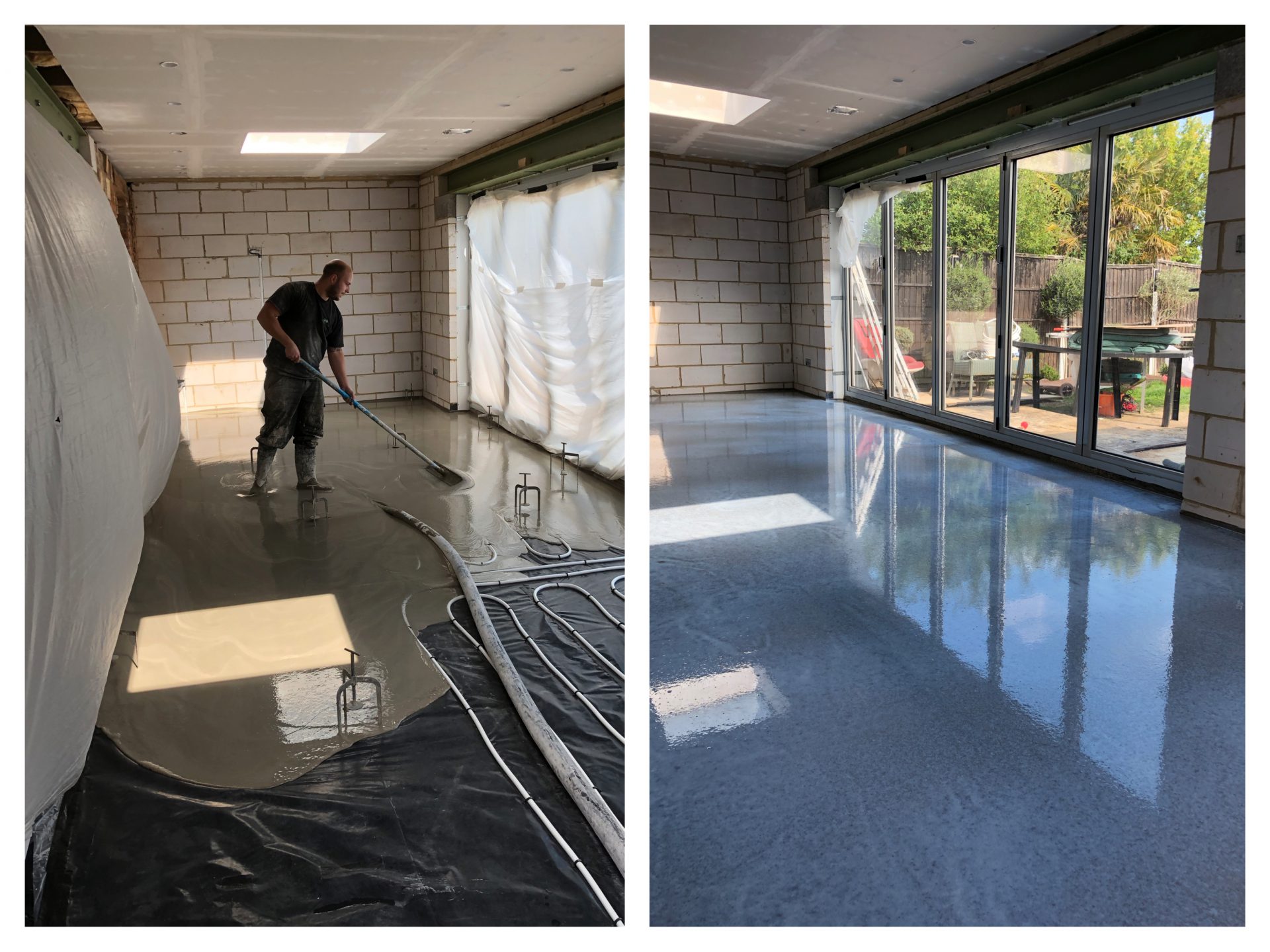
Liquid screed is a free flowing, self levelling floor screed that’s pumped into place rather than laid by hand. It’s mixed to a liquid consistency, poured across the subfloor, and left to spread and settle on its own, creating a flat, smooth base ready for tiles, wood, carpet or any other final floor covering. Because it flows and self levels, it’s become the standard choice for anyone installing underfloor heating, and increasingly the go to option for extensions, new builds and renovations more generally.
If you’ve been quoted for a floor and the word screed keeps coming up, or you’re comparing liquid screed against the traditional sand and cement method, this guide covers what liquid screed actually is, how it’s made, how it’s installed, and what it costs so you can go into your project with a clear picture. If you’d rather skip straight to a quote, our liquid screed service page covers the mixes and manufacturers we work with.
What liquid screed is made of
There are two main families of liquid screed. The first is calcium sulphate screed, also called anhydrite screed. It uses a gypsum based binder rather than cement, mixed with fine aggregates, water and flow control additives that let it spread out and level itself once poured. The second is cementitious liquid screed, which still uses a cement binder like traditional screed but is formulated to flow and self level in the same way. Cementitious mixes are the option to reach for in wet areas, bathrooms and anywhere exposed to the elements, since calcium sulphate screed can’t tolerate standing water.
Both types arrive on site ready mixed in a tanker and get pumped through a hose directly to the room being screeded, rather than being mixed by hand and shovelled into place.
Liquid screed vs traditional sand and cement screed
Traditional screed is a stiff, dry mix of sand, cement and water that’s barrowed in, spread with a rake and levelled by hand using a straightedge. It’s a manual, labour intensive job, and because the mix is dense and thick, usually laid around 50mm deep, it dries slowly. Building industry guidance from BS 8204 puts drying at roughly one day per millimetre of thickness for the first 50mm, which means a standard floor can take several weeks before it’s ready for flooring.
Liquid screed is pumped in a liquid state and spreads and compacts itself, which removes the air pockets and voids that hand tamping can leave behind, particularly around underfloor heating pipework. It can also be laid at a thinner depth than a traditional mix while still meeting the same structural requirements, and because there’s less material to dry out, it’s typically ready for light foot traffic within 24 to 48 hours.
The main benefits of liquid screed
- Faster installation. A pumped screed can cover a large area in a fraction of the time it takes to hand lay the same floor.
- Self levelling finish. The liquid consistency finds its own level, giving a flatter surface with less reliance on manual skill than a hand trowelled screed.
- Thinner application. Liquid screed can often be laid at a reduced depth compared with sand and cement, which helps on projects with limited floor build up.
- Better heat transfer. Liquid screed sits in closer contact with underfloor heating pipes than a hand compacted screed can, which improves how efficiently the system heats the room.
- Fewer joints. Liquid screed can typically be poured across larger continuous areas before a movement joint is needed, reducing weak points in the floor.
Is liquid screed good for underfloor heating
Liquid screed has become closely associated with underfloor heating because it wraps tightly around the pipework with no gaps, giving even, efficient heat distribution across the whole floor. A cementitious or calcium sulphate liquid screed can usually be laid at a shallower depth over the pipes than a traditional mix would need, which matters on renovations where floor height is tight against doorways and stairs. Our underfloor heating team can design and install the system alongside the screed so both are specified to work together.
It’s worth noting that underfloor heating shouldn’t be switched on the moment the screed is poured. Most manufacturers recommend an initial curing period, commonly around seven days, before the heating system is gradually brought up to temperature in small increments to avoid drying the screed out too quickly and causing cracking.
How long does liquid screed take to dry
Drying times depend on the screed type, its depth, and the site conditions, but as a general guide, liquid screed will usually take light foot traffic within 24 to 48 hours of being poured. Getting it dry enough to accept a floor covering takes longer. According to guidance from Clockwork UFH, liquid screed is typically ready for tiling in around 7 days when a compatible primer or adhesive is used, or up to 21 days with a conventional adhesive, while solid wood or laminate flooring usually needs closer to 28 days of drying time.
Good ventilation, a stable room temperature and dehumidifiers can all help the screed dry evenly. Rushing this stage is one of the most common causes of problems with a new floor, so it’s worth checking moisture levels before committing to the final floor covering rather than working to a fixed calendar date. Our liquid screed aftercare guide covers the drying and heat up schedule step by step.
How much does liquid screed cost
Prices vary by region, project size and access, but liquid screed typically costs a bit more per square metre than a basic sand and cement mix, mainly because of the ready mixed material and pump hire involved. Trade pricing data from MyBuilder puts liquid floor screed at roughly £25 to £34 per square metre supply and install, against £20 to £33 per square metre for traditional sand and cement.
That gap tends to narrow, or disappear altogether, once labour and programme time are factored in. Because liquid screed installs so much faster and needs far less manual levelling, the overall cost of a project can end up similar to, or even cheaper than, a traditional screed once you account for reduced site time and fewer delays waiting for the floor to dry.
How liquid screed is installed
On the day, an installer will check the subfloor is clean, level and free of debris, and that any damp proof membrane and edge insulation strips are in place. Our liquid screed preparation guide sets out exactly what needs to be ready before the pump arrives, and our floor preparation service can handle that groundwork for you. The screed arrives ready mixed in a tanker and is pumped through a hose directly into the room, where it’s guided to the correct depth using a levelling tool. Once poured, it self levels and is left undisturbed to begin curing, usually protected from draughts and direct sunlight for the first day or two so it doesn’t dry unevenly.
For most domestic rooms this whole process takes a matter of hours rather than days, which is one of the main reasons liquid screed has become the preferred option for extensions and renovations where time on site is limited.
Is liquid screed the right choice for your project
For anyone installing underfloor heating, liquid screed is generally the more practical option thanks to its even heat distribution and shorter drying window. For smaller, simple areas without underfloor heating, a traditional screed can still make sense, particularly where budget is tight and time isn’t a major constraint. If you’re unsure which is right for your floor, it’s worth getting a specification and quote from a qualified screeding contractor who can assess your subfloor, depth requirements and timeline before you commit. Contact Express Liquid Screeds for a personalised quotation on your project.
FAQs
Is liquid screed better than sand and cement screed?
It depends on the project. Liquid screed installs faster, self levels and generally dries quicker, which makes it the better fit for underfloor heating and time sensitive builds. Traditional sand and cement can still be the more economical choice for small, simple areas without underfloor heating.
Can liquid screed be used outside?
Calcium sulphate (anhydrite) screed can’t be used in wet or exposed areas because it isn’t water resistant once cured. A cementitious liquid screed can tolerate damp or external conditions, so that’s the type to specify for outdoor spaces, balconies or wet rooms.
How thick does liquid screed need to be?
Depth depends on whether underfloor heating is involved and what the floor will be used for, but liquid screed can often be laid thinner than a traditional mix while still meeting the same performance requirements. A screeding contractor will confirm the minimum depth for your specific subfloor and heating pipe diameter.
Does liquid screed crack?
Liquid screed has a lower shrinkage rate than traditional screed, which makes cracking less common, but it can still crack if it dries too quickly, isn’t given a proper curing period, or if underfloor heating is switched on too early. Following the manufacturer’s drying and heat up schedule is the best way to avoid it.
How soon can you walk on liquid screed?
Most liquid screeds take light foot traffic within 24 to 48 hours of being poured, though the floor needs considerably longer than that, often several weeks depending on the final floor covering, before it’s fully dry and ready to be covered.