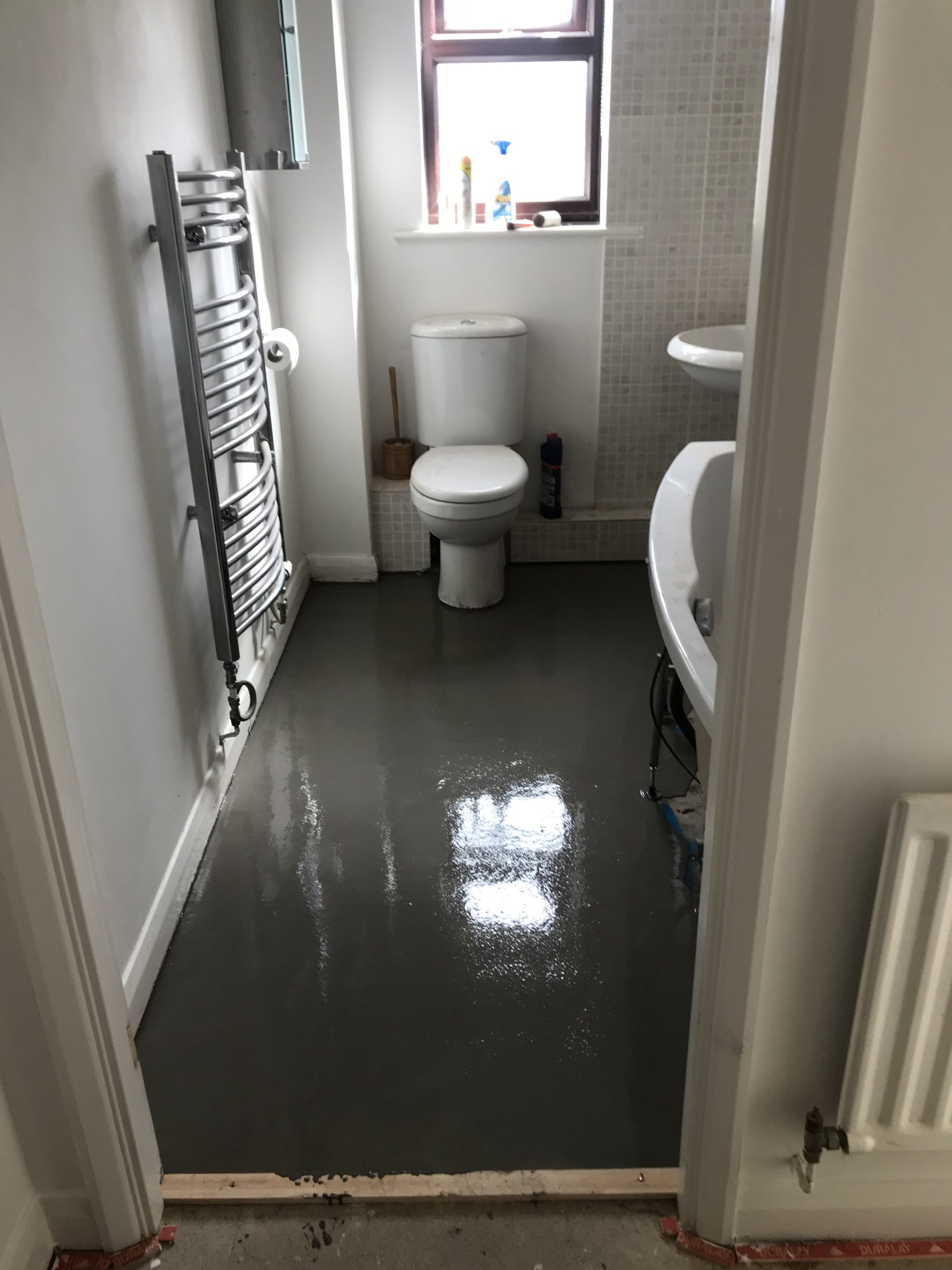
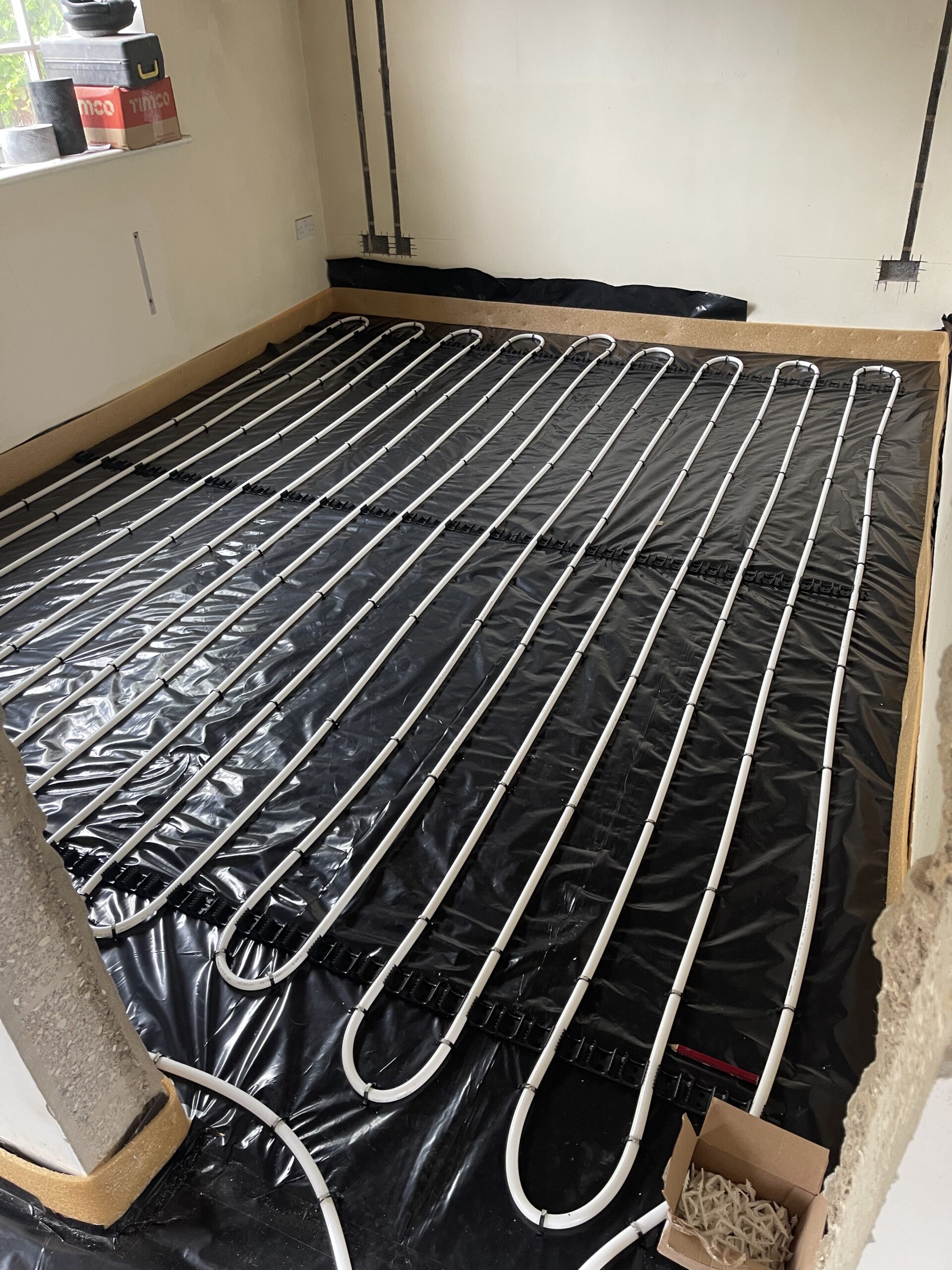
A polished concrete overlay is a thin, hard-wearing layer applied over an existing concrete slab and then ground and polished to a smooth, reflective finish. The main advantages of using polished concrete overlays are that they save you from tearing out a damaged or worn floor, they install and cure far faster than a full replacement, and they produce a durable, low-maintenance surface that can last decades with occasional re-polishing. For anyone weighing up flooring options for a warehouse, showroom, retail unit or home, that combination of speed, strength and finish is hard to match.
This guide looks at where those advantages actually come from, where overlays work best, and what to think through before you commit to one.
What Is a Polished Concrete Overlay?
An overlay is a self-levelling or trowel-applied cementitious topping, often laid from around 10mm thick, bonded to an existing subfloor. Once it’s cured, it’s mechanically ground with progressively finer diamond tooling until the surface is dense, smooth and reflective, in much the same way a natural concrete slab is polished. The difference is that an overlay lets you achieve that finish on a floor that wouldn’t otherwise be suitable, whether that’s because the existing slab is cracked, uneven, contaminated, or simply too thin to grind back on its own.
The Advantages of Using Polished Concrete Overlays
You Don’t Have to Rip Out the Existing Floor
Demolishing and re-pouring a slab is disruptive, expensive and slow. An overlay works with what’s already there. Provided the subfloor has been properly assessed and prepared, and any moisture or contamination issues dealt with first, the existing concrete becomes the base rather than a problem to remove. That’s a large part of why overlays have become a go-to option for renovating tired industrial and commercial floors rather than replacing them outright.
A Much Faster Turnaround
Because there’s no breaking out, no waste disposal and no waiting for a new slab to cure to full strength, overlays move quickly. As an example, Express Liquid Screeds’ polished concrete topping can be applied from just 10mm thick and is polishable within 24 hours of installation, with many projects prepared and completed in under a day. A full replacement, by comparison, typically needs weeks for the new slab to cure before it can take heavy loads or foot traffic.
Genuine Durability, Not Just a Marketing Line
A well-installed polished overlay is dense, hard-wearing and resistant to abrasion, and it doesn’t chip, peel or flake the way a coating or paint system can. It’s also one of the few floor finishes that can be refreshed rather than replaced. When the surface eventually dulls from years of traffic, it can be re-ground and re-polished, which is why manufacturer-backed systems are commonly rated for 25 years or more of service life.
More Design Freedom Than People Expect
Overlays can be tinted, polished to different gloss levels, scored into patterns, or finished with exposed aggregate for a terrazzo-style look, all without the cost of a full terrazzo installation. That makes them as suited to a boutique retail fit-out or a residential kitchen as they are to a distribution warehouse.
A Lighter Environmental Footprint Than Full Replacement
Reusing an existing slab instead of breaking it out and pouring a new one avoids a significant amount of demolition waste and new material. The Concrete Centre has made the case that extending the working life of existing concrete through repair and adaptation, rather than demolition and replacement, is one of the most efficient ways to reduce embodied carbon in a building, since the emissions and resources already invested in that structure are retained rather than wasted. An overlay puts that principle into practice at floor level.
Easier to Keep Clean, With Slip Resistance You Can Actually Measure
A polished surface is dustproof, non-porous and quick to wipe down, which matters in food production, healthcare and retail environments where hygiene standards are strict. Slip resistance is often raised as a concern with any smooth, glossy floor, and it’s a fair question. The UK’s Health and Safety Executive notes that smooth, polished surfaces need proper assessment, since they can become significantly more slippery once wet or contaminated than a textured finish. The Concrete Society recommends a pendulum test value, measured to BS 7976, of 36 or higher to indicate a low slip potential, rising to 41 or higher on ramps and inclines. A properly specified overlay can be finished to meet those figures. Express Liquid Screeds’ own polished topping, for example, is tested to a minimum of 58 dry and 36 wet.
Where Polished Concrete Overlays Make the Most Sense
Overlays are most valuable where the existing slab is structurally sound but cosmetically or functionally past its best. Think worn warehouse floors, former carpet or tiled commercial units, or older industrial buildings being converted into showrooms and offices. They’re also increasingly popular in new-build homes and extensions, applied as a polished finish directly over a liquid screed subfloor, which gives a seamless look without the extra build-up of a separate floor covering.
What to Weigh Up Before You Commit
Overlays aren’t the right call for every floor. The existing slab still needs proper preparation, including moisture testing, crack repair and removal of any residual adhesives or coatings, or the new surface won’t bond correctly. Polished finishes are also harder underfoot and less forgiving than carpet or vinyl, and while the surface itself resists abrasion well, sharp impacts or dragged heavy equipment can mark it. None of these are reasons to avoid an overlay, but they’re worth discussing with your installer before work starts.
How Installation Actually Works
The process starts with an assessment of the existing slab and any necessary preparation work, followed by priming to help the overlay bond. The overlay itself is then poured or trowel-applied, left to cure for the manufacturer’s specified time, and ground back in stages using progressively finer diamond tooling until the required gloss and slip resistance are achieved. Because the whole sequence can be compressed into a single day for smaller areas, it’s realistic to plan an overlay project around a weekend shutdown rather than weeks of downtime.
If you’re weighing up an overlay against a full replacement for your own floor, it’s worth getting a firsthand assessment. A short site visit is usually enough for an installer to tell you whether your existing slab is a good candidate and roughly how quickly the work could be turned around.
FAQs
How long does a polished concrete overlay last?
With proper installation and normal use, a polished overlay typically lasts well beyond a decade, and manufacturer-backed systems are often rated for 25 years or more of service, because the surface can be re-ground and re-polished rather than replaced when it starts to dull.
Is a polished concrete overlay as strong as a full concrete floor?
A correctly specified and installed overlay is dense, hard-wearing and resistant to abrasion, and is suitable for commercial and industrial traffic. Its performance depends heavily on proper subfloor preparation and bonding, which is why an assessment of the existing slab always comes first.
Are polished concrete overlays slippery?
Any smooth, glossy floor needs the right slip resistance for its use, particularly in wet or contaminated areas. Overlays can be finished to specific pendulum test values, in line with HSE and Concrete Society guidance, to suit anything from a domestic kitchen to a food production area.
Can you polish an overlay over an old tiled or carpeted floor?
Yes, once the existing covering, adhesive residue and any contamination have been fully removed and the subfloor has been properly assessed and prepared. This is one of the main reasons overlays are popular for renovating commercial units without a full floor replacement.
How much does a polished concrete overlay cost compared to a new slab?
Costs vary by project, but overlays are generally more cost-effective than demolishing and re-pouring a slab, because they avoid breaking out, waste disposal and extended curing time. Getting a quote based on your specific floor condition and area is the most reliable way to compare the two.
If you’re weighing up electric underfloor heating pros and cons, the short version is this. It’s cheap to install, warms a room evenly and takes up no wall space, but it costs more to run than gas central heating or a water based system, and it isn’t always the best choice for heating a whole house. Which option suits you depends on the room, your floor build up and how you plan to use it.
This guide walks through how electric underfloor heating works, where it genuinely pays off, where it falls short, and how it compares with water (wet) underfloor heating systems, which are usually installed within a liquid screed floor.
How electric underfloor heating works
Electric underfloor heating, sometimes called a dry system, uses a thin heating cable or mat installed just beneath the floor covering. It’s wired into the mains and controlled by a thermostat, so each room or zone can be switched on independently. There’s no boiler, no pipework and no manifold involved, which is part of why it’s popular for bathroom and kitchen renovations.
Water (wet) underfloor heating works differently. It circulates warm water through a network of pipes, usually fed by a boiler or heat pump, and those pipes are typically embedded in a liquid screed floor rather than the traditional sand and cement mix. We’ll come back to how that comparison plays out below.
Pros of electric underfloor heating
Lower installation cost
Electric systems are generally cheaper and quicker to fit than wet systems, since there’s no boiler connection, manifold or pipework to install. This makes them a popular choice for single room retrofits, such as a bathroom or kitchen extension, where running new pipework would be disruptive.
Even heat, no cold spots
Because the whole floor acts as the heat source, warmth rises evenly through the room rather than radiating from one wall mounted unit. Which? notes that underfloor heating systems in general can run at relatively low surface temperatures, typically around 35°C, compared with 55 to 65°C for a radiator, while delivering the same level of comfort. Electric systems also heat up slightly faster than water based systems, typically within an hour to 90 minutes.
Slim profile
Electric heating mats and cables can be as thin as 42mm once installed, making them a practical option where floor height is tight, such as in a renovation or loft conversion. A water based system is bulkier, often around 130mm, though this can be reduced with a liquid screed floor build up.
No radiators, more usable wall space
With the heat source hidden under the floor, you get the wall space back for furniture, storage or simply a cleaner looking room, and there’s nothing for children or pets to bump into.
Low maintenance
Once installed, electric underfloor heating has no moving parts, no valves and nothing that needs bleeding. Faults are rare during normal use and are more likely to stem from installation damage than day to day wear.
Works under most floor coverings
Electric systems can go under tile, stone, engineered wood, vinyl and most laminates. Tile and stone conduct heat the most efficiently, while thick carpet and solid wood aren’t recommended because they trap heat or can warp.
Cons of electric underfloor heating
More expensive to run
This is the trade off that catches most homeowners out. Electric underfloor heating is generally more expensive to run than a gas fed wet system, simply because electricity costs more per unit than gas. Under the Ofgem price cap for July to September 2026, the average direct debit rate is 26.11p per kWh for electricity against 7.33p per kWh for gas, a gap of well over three times.
The Energy Saving Trust puts it plainly, dry electric systems are usually cheaper to install but more expensive to run than wet systems. For a single bathroom on a timer, that difference is manageable. As your primary heating for a whole ground floor, it adds up fast.
Not ideal as your only heat source in an older property
To work well as the sole heat source in a room, an electric system needs to cover at least 80 to 90% of the floor area, run at a minimum of 200W per square metre, and sit above proper insulation boards to stop heat escaping downwards. In an older home with solid walls, no loft insulation or single glazed windows, underfloor heating alone often can’t keep up, whichever type you choose.
Repairs can mean lifting the floor
Faults are uncommon, but if a cable does fail, a specialist engineer needs to pinpoint the break, which can mean excavating a section of flooring rather than a simple call out job. It’s worth checking what warranty or guarantee is included before you buy.
Limited scope for whole house heating
Electric underfloor heating is rarely used to heat an entire house, both because of the running cost and because most homes don’t have the spare electrical capacity for it without upgrades. For whole house projects, a water based system fed by a boiler or heat pump is the more common and more cost effective route.
Electric vs water underfloor heating: which is right for you
Neither system is universally better, it depends on the scope of the project.
Electric underfloor heating tends to make sense for smaller, self contained areas such as a bathroom, ensuite or kitchen extension, particularly where a wet system would mean disruptive pipework and where the room already has central heating covering the rest of the house.
Water underfloor heating usually wins out for new builds, extensions and full renovations, especially where the property is being fitted with a heat pump. Because heat pumps run most efficiently at lower flow temperatures, and underfloor heating typically only needs 35 to 45°C to heat a room compared with 60 to 70°C for radiators, the two pair naturally. The Energy Saving Trust notes that pairing a wet underfloor system with a heat pump can be considerably more efficient than running an older boiler through radiators.
This is where liquid screed comes in. Rather than the pipework being set in a thick, slow drying sand and cement mix, it’s poured around the heating pipes in a thinner, self compacting layer with no voids, giving the system exceptional thermal conductivity of up to 2.9W/m.k. It also dries and can be walked on far sooner, and 100 square metres can be laid in under 45 minutes. For anyone installing underfloor heating as part of a new build or major renovation, that combination of speed, efficiency and a slimmer floor build up is usually the better long term investment.
Is electric underfloor heating worth it?
For a single room, particularly somewhere like a bathroom where you want warm tiles underfoot and don’t want to disturb the rest of your heating system, electric underfloor heating is usually worth it. The lower installation cost and simple retrofit make it an easy win.
For heating a whole floor or property, the higher running cost tends to outweigh the lower install price over time, and a water based system, especially one paired with a heat pump and laid in liquid screed, will usually work out cheaper to live with.
FAQs
Is electric underfloor heating cheaper to run than gas central heating?
No, generally not. Because electricity costs more per unit than gas, running electric underfloor heating as your main heat source usually costs more than a gas boiler feeding radiators or a water underfloor system. It can still work out cost effective for a single room that would otherwise need its own separate heating zone.
Can you have electric underfloor heating with liquid screed?
Liquid screed is most commonly used with water underfloor heating, where it’s poured around the pipework itself. Electric mats and cables are usually installed just beneath the floor covering rather than embedded in screed, though a screeded floor can still be used above an electric system in some builds.
How long does electric underfloor heating take to install?
A straightforward mat installation in a single room can often be completed in a day, though the floor and adhesive need time to cure before you can walk on it or lay tiles. This is usually much quicker than a water system, which involves pipework, a manifold connection and, in most cases, a screed floor that needs time to dry.
Is electric underfloor heating worth it in a UK home?
It’s worth it for smaller spaces like bathrooms, ensuites and kitchens, where the lower installation cost and easy retrofit outweigh the running cost. For whole house heating, most UK homeowners are better served by a water based system, particularly if a heat pump is part of the plan.
What is the difference between electric and water underfloor heating?
Electric systems use a heating cable or mat wired into the mains, are cheaper and quicker to install, and suit single rooms. Water systems circulate warm water through pipes fed by a boiler or heat pump, cost more to install but less to run, and are the usual choice for heating a whole property, particularly when laid within a liquid screed floor.
In short, no, not to a genuine polished concrete finish. Liquid screed, whether it’s a calcium sulphate (anhydrite) mix or a cementitious one, is designed to be a level base for tiles, wood, carpet or another floor covering, not a decorative surface in its own right. Grinding and mechanically polishing it the way you would a concrete slab tends to expose weaker, more porous material underneath and can leave the surface patchy or prone to dusting. If you want that smooth, glossy, exposed floor look, the reliable route is a dedicated polished concrete topping laid over the screed rather than polishing the screed itself.
Why liquid screed isn’t built to be a finished floor
Screed of any kind, liquid or traditional, is what’s known as a wearing or non wearing subfloor layer. It’s formulated to be flat, stable and quick to install, and its finish is deliberately left slightly open and porous so that adhesives, primers and floor coverings key into it properly. That’s the opposite of what you want for a polished surface, which needs a dense, closed material that can take a mechanical grind without breaking down.
Can anhydrite (calcium sulphate) liquid screed be polished
Not really, and it’s generally not worth attempting. Calcium sulphate screed is gypsum based, so it’s softer than a cementitious mix and its natural colour can vary from batch to batch, which makes an even, polished finish hard to guarantee even where the surface can take it. Guidance from Easyflow notes that while a hardener can be applied and the surface mechanically polished, anhydrite screed was never designed to be the final flooring, and covering it with tiling or carpet is usually the more reliable option.
There’s also a practical risk if you try to add a decorative overlay on top instead. Anhydrite and hemihydrite screeds hold onto moisture for longer than cementitious ones, and guidance from Carrcrete points out that trapping that moisture under a bonded topping can lead to delamination further down the line, so any overlay needs the screed properly dried and tested first.
Can cementitious liquid screed be polished
Cementitious liquid screed is closer to concrete in composition, so it holds up better to grinding than an anhydrite mix, but it still isn’t a like for like substitute for polished concrete. Research from British Concrete Polishing found that flow screeds generally aren’t ideal candidates for polishing because the aggregate is much finer than in a structural concrete slab, so grinding it back rarely produces the same depth of finish or aggregate exposure. Some cementitious screeds can be lightly ground and sealed for a smoother, low sheen look, but it’s a job for a specialist who can test the specific product first, since many screeds won’t tolerate more than light grit before the surface starts to fail.
The reliable way to get a polished floor over liquid screed
If the end goal is a genuine polished, glossy floor rather than something to hide under tiles or wood, the better option is a purpose made polished concrete topping installed over the cured screed, rather than trying to polish the screed itself. This is a thin, trowel applied overlay, often laid from around 10mm thick, that’s ground and polished in the same way as a structural concrete floor, giving a consistent, durable, high gloss finish that a raw screed surface simply isn’t formulated to achieve. Our own polished concrete toppings service is designed exactly for this, and can be re-polished multiple times over the life of the floor rather than being a one off finish.
What about sanding or sealing instead
Sanding a liquid screed is sometimes used to knock back high spots or smooth the surface before laying a floor covering, but it’s a corrective step rather than a finishing one. As J&H Lynch’s guide to liquid screed finishes puts it, targeted sanding and specialist sealing can help prepare the base, but polishing isn’t really an option on the raw screed itself. Sealing can offer some protection during the build phase, but on most projects the screed is still intended to be covered rather than left exposed long term.
How to tell what type of screed you have
Since the right approach depends heavily on whether you have an anhydrite or a cementitious mix, it’s worth checking before deciding on a finish. If the screed was installed recently, the contractor should have a record of the exact product used. Cementitious screeds are generally a darker grey and feel harder underfoot, while calcium sulphate screeds tend to be a lighter, more uniform grey and feel slightly softer. If you’re not sure, it’s best to get a specialist to check before grinding, sanding or applying anything to the surface.
Getting the right finish for your floor
If you’re planning a screed and already know you want an exposed, polished result rather than a covered floor, it’s worth specifying that from the outset so the right screed and topping combination gets used, rather than trying to polish a standard liquid screed after the fact. Contact Express Liquid Screeds to talk through your project and whether a liquid screed with a polished concrete topping is the right fit.
FAQs
Can you leave liquid screed as the finished floor without covering it?
It’s possible in some low traffic areas with a cementitious screed and a sealer, but it isn’t what liquid screed is designed for and the finish won’t match a proper polished concrete floor. Most projects still cover the screed with tiling, wood or another final floor finish.
Does polishing liquid screed cost less than a polished concrete topping?
Attempting to polish the screed itself might look cheaper upfront, but the results are inconsistent and can fail early, which often costs more to put right. A proper polished concrete topping is a more predictable and durable route to a genuine polished finish.
Can you polish liquid screed over underfloor heating?
Yes, a polished concrete topping can be applied over a screed installed with underfloor heating, but the screed needs to be fully cured and moisture tested first, and the heating system should follow its usual gradual heat up schedule before any topping work begins.
Will polishing liquid screed remove the trowel marks or texture?
Light grinding can smooth out minor surface texture, but liquid screed isn’t dense enough to take a full mechanical polish without exposing weaker material underneath. A topping system is the more reliable way to get a completely smooth, glossy result.
How do I know if my screed is anhydrite or cementitious?
Check with the original installer if possible, as they’ll have a record of the product used. As a rough guide, cementitious screed is usually darker and feels harder, while anhydrite screed is lighter in colour and slightly softer underfoot, though a specialist assessment is the safest way to confirm it.