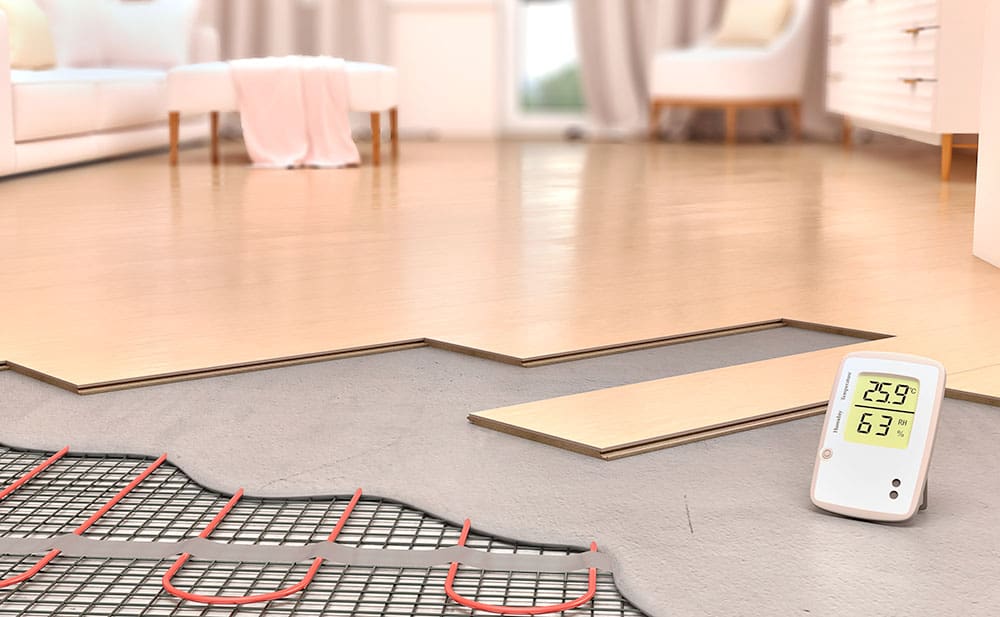
Underfloor heating involves pipes or electrical cables distributed throughout the home, under the floor. These pipes heat up, supplying the home with warmth from the ground up.
Underfloor heating offers several advantages over traditional boiler systems, including more even heat distribution, energy efficiency and design flexibility. In this article, we briefly look at types of underfloor heating, the installation process, how it heats as well as the benefits of choosing underfloor heating.
Types of Underfloor Heating
There are two types of underfloor heating:
– Hydronic (Water-based) Underfloor Heating: This system moves warm water through a network of pipes that sit beneath the floor.
– Electric Underfloor Heating: This system generates heat through the use of electric cables or mats that sit under the floor.
Underfloor Heating Installation Process
– For hydronic underfloor heating, pipes are laid out in a network across the floor before the floor is covered with a screed or concrete layer.
– With electric underfloor heating, heating mats or cables are laid evenly across the floor before being covered by a layer of tile adhesive or Thinset.
How They Heat
– In hydronic systems, hot water will be heated by a boiler or a heat pump before it is circulated through the pipes.
– Electric systems generate heat directly through the cables or mats.
Efficiency and Comfort
Underfloor heating provides more even heat distribution when compared with traditional radiators. This avoids cold spots in rooms. Because heat rises from the floor, it creates an evenly warm and comfortable environment throughout your home. And, because underfloor heating systems run at lower temperatures than traditional boilers, they can offer energy savings and reduced bills.
Different Flooring Types
Underfloor heating performs best with flooring such as tile, stone, laminate, engineered wood, and some carpets. It’s really important to choose a flooring material that has good thermal conductivity, to ensure the heat is transferred effectively.
Maintenance
Underfloor heating doesn’t need too much maintenance after initial installation. Routing inspections and checks of the system will ensure everything is in full working order.
Want to Install Underfloor Heating?
At Express Liquid Screeds, we supply and lay specialist screeds that offer exceptional thermal conductivity. We partner with a great underfloor heating installation company that manufactures quality underfloor heating components and packages.
Concrete is a great building material that is used extensively in construction work, as it offers a huge range of benefits.
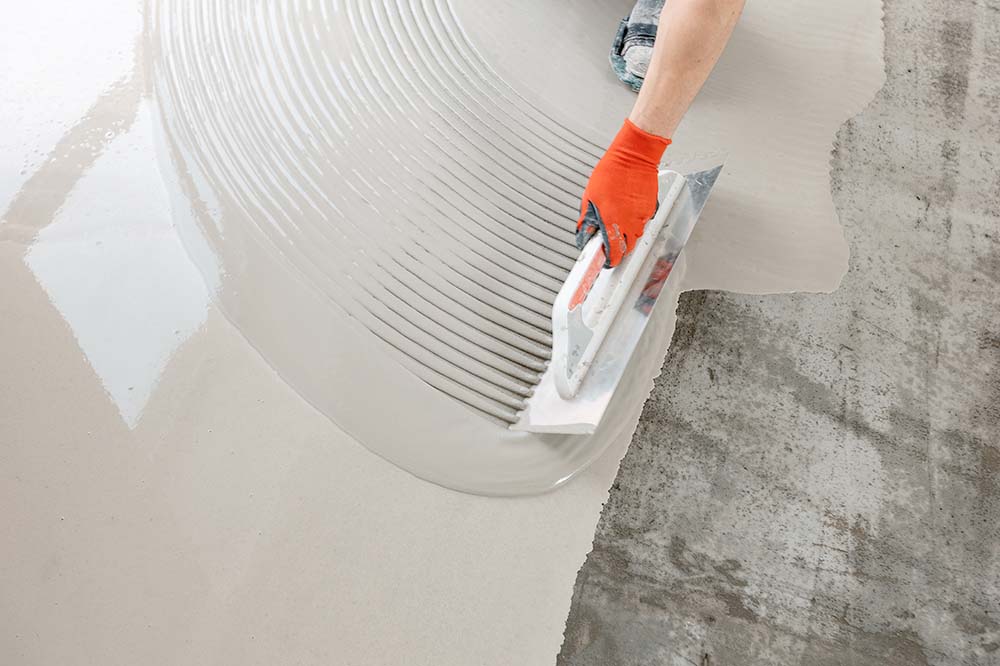
Different concrete offers different advantages. One type of concrete we are particularly familiar with is liquid screed. Liquid screed is an easy-to-pour concrete that creates a perfectly level surface. It’s tough, durable and thermally conductive, making it an environmentally friendly option.
Read on to find out more about liquid screed and its benefits.
What Is Liquid Screed?
Liquid screed is a calcium sulphate and cement-based product that is easy to lay. It is often confused for concrete, but it is not necessarily the same thing. Liquid screed has different properties than regular concrete so it behaves in a very different way.
Liquid screed will be poured on top of an existing concrete layer, to offer a neat, level and smooth surface. After the liquid screed has dried, the flooring of your choice can then be laid on top (carpet, wood, tiles etc.).
At Express Liquid Screeds, we supply both anhydrite/calcium sulphate and cementitious liquid screeds, using our specially-designed liquid screed pump.
What Are The Benefits Of Liquid Screed?
Liquid screed is a lifesaver for contractors, as it offers so many fantastic benefits that make construction easier!
To name just a few of these benefits:
It is easy to lay, which reduces installation time and costs
It can be used with so many types of flooring, including wood, lino, vinyl, tile, carpet etc.
It offers a neat and smooth surface thanks to its self-levelling characteristics
It is hard-wearing, sturdy and durable
It can be dry in little to no time (our liquid screed will be ready to walk on within 24-48 hours)
Its conductive properties mean it is compatible with underfloor heating, when poured it will seamlessly fit around any pipes
It offers minimal shrinking when drying (<0.1%)
There will be no surface dust after laying
Want To Know More About Liquid Screed?
If you’re curious about liquid screed and whether it could work in your next construction job, just get in touch. Our team of specialists will be happy to answer any questions you might have. Contact us for a quote today to find out all the amazing things Express Liquid Screed can do for you.
Underfloor heating has become a popular choice for homeowners in London. It offers a comfortable and efficient way to heat your property. Plus, it can run off green power if you are looking to improve your sustainability.
If you’re considering underfloor heating installation in your London property, there are a few things to keep in mind. In this blog post, we’ll explore five things you should know before underfloor heating installation.
Choosing The Right System:
Before jumping straight into underfloor heating installation, it’s essential to choose the right system for your space. There are two main types of underfloor heating systems: electric and water-based (hydronic).
Electric systems are easier to install. Usually, they are more suited to smaller areas or renovations.
On the other hand, water-based systems are more efficient for larger spaces.
The type of flooring in your London home will impact how well the underfloor heating works.
While underfloor heating works well with most flooring materials, naturally certain choices will be better than others, as different types of material have different conductivity.
For example, tiles and stone are great choices as they transfer heat really well. However, thick carpets are natural insulators, so they might reduce the system’s effectiveness. You should discuss your flooring options with the underfloor heating installation team in London to make the right decision.
Professional Installation is Important:
Underfloor heating installation is not a simple DIY task. Especially in London where there are so many strict building regulations. It’s essential to hire a professional underfloor heating installation company.
A professional company will ensure the installation sticks to all building regs, but also that any concerns are addressed to ensure a system that works properly.
Looking For Underfloor Heating Installation in London?
Investing in underfloor heating for your home in London is a great choice. It can bring even heat to your home, whilst improving your green credentials and reducing your energy bills along the way. However, before you jump into installation, be sure to chat with a professional first!
If you would like to find out about underfloor heating installation from our London team, just get in touch.